Introduction
Our prestigious hospital, which was situated in Salem town, was started in 1917 in order to serve the people of Salem and surrounding areas.
The foundation of our GMKMC college on Steel Plant Road was laid by our honourable Prime Minister, Late Shri. Rajiv Gandhi, on 25th October 1988.
The first batch was started with admission of 75 M.B.B.S. students from July 1990.
The base of the Biochemistry department was renovated in 1991.
The Department of Biochemistry, GMKMC, under the leadership of able professors and dedicated faculties, has played a monumental role in strengthening the foundations of countless medical students, for Biochemistry is one of the three basic subjects to be mastered in the first year of their undergraduate study.
The Clinical Biochemistry laboratory provides round-the-clock services in aiding the diagnosis and management of the ever-increasing number of patients who attend the GMKMC Hospital from in and around Salem.
The department also gives extensive training and imparts a high degree of professional competency to Post Graduates, M.B.B.S. students, Medical Laboratory Technology students (2 yrs), BSc MLT (3 yrs), CT, OT, AT students, in addition to educating Nursing and other paramedical students on the essentials of biochemistry.
Administration
Heads of Department — History
| S.No | HOD | Time Period |
|---|---|---|
| 1 | Prof. Dr. Sakunthala Subramaniam, M.D | 1990–1993 |
| 2 | Prof. Dr. V. Mohammed Kasim, M.D | 1993–1994 |
| 3 | Prof. Dr. C.M. Seshasainam, M.D | 1994–1996 |
| 4 | Prof. Dr. Evangeline Nesa Rathinabai, M.D | 1996–2007 |
| 5 | Prof. Dr. Priya Jeyapal, M.D | 2007–2015 |
| 6 | Prof. Dr. P. Josphine Latha, M.D | 2015–2021 |
| 7 | Prof. Dr. R. Rangarajan, M.D | 2021 – Till Date |
Associate Professors
| 1 | Dr. U.P. Priyadharshini, M.D |
| 2 | Dr. T. Rajalakshmi, M.D |
Assistant Professors
| 1 | Dr. S. Anandhi, M.D |
| 2 | Dr. P. Sangeetha, M.D |
Tutors
| 1 | Dr. Kugha Priya, M.D |
| 2 | Dr. K. Sathya, M.D |
| 3 | Dr. T. Kavitha, M.D |
| 4 | Dr. R. Kalaiselvi, M.D |
| 5 | Dr. R.P. Vinodkumar, M.D |
| 6 | Dr. P. Ravisekar, M.D |
| 7 | Dr. R. Praba, M.D |
| 8 | Dr. Gomathi, M.D |
Teaching Program
- The annual intake of MBBS students increased from 75 to 100, so did the intensity of academic activities focused on student excellence. Apart from regular class schedules, tutorial classes and internal assessment exams in theory/practicals, the students are subjected to weekly tutorial tests and regular assignments, prodding them to pursue their lessons with deeper understanding and thoroughness, and to enhance their performance in the University examinations.
- As another means of intellectual stimulation, the students are required to present seminars/symposia on various topics, using PowerPoint presentations, charts and other audio-visual aids, during their period of study in the department.
- The department also makes sure that the parents are informed regarding their children's progress by sending the attendance and mark particulars of students every three months. The parents in turn respond by coming to the department periodically to meet the HOD and staff to discuss the performance of their children, which helps in encouraging them to perform better.
- In addition, the department organizes and participates in horizontal and vertical Integrated Teaching Programs to provide the students a bird's eye view of the concerned topic.
Integrated Teaching Programs of every academic year involve the departments of Anatomy, Physiology and Biochemistry, also with Microbiology, General Medicine and General Surgery, on the following topics:
| Topic of Discussion | Biochemistry |
|---|---|
| Liver | Jaundice and LFT |
| Heart | Cardiac Markers |
| Thyroid | Thyroid Function Tests |
| Stroke | Atherogenesis, Cholesterol, Lipid Profile, Nutrition & Obesity, Life Style |
| Pancreas | Pancreatic Function Tests |
| Immunology | — |
| Hormones | Mechanism of Actions, Synthesis and Function Tests |
CME / CLE Programmes — Continuing Laboratory Education Conducted
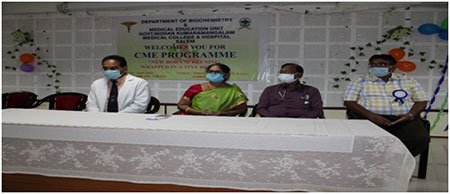
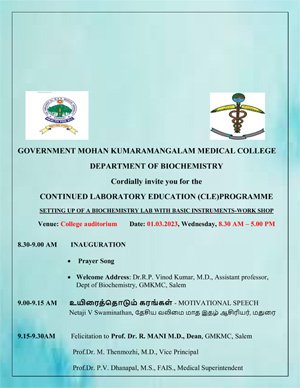
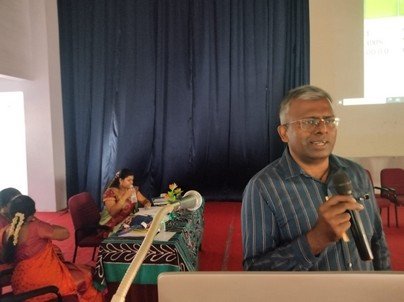
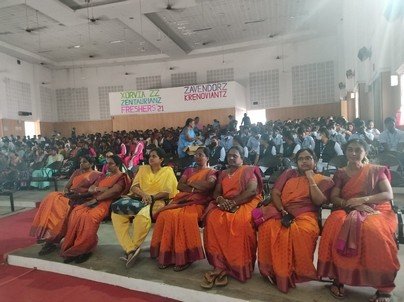
Topic: Setting Up of a Biochemistry Lab with Basic Instruments – Workshop
Date: 01.03.2023
Venue: College Auditorium
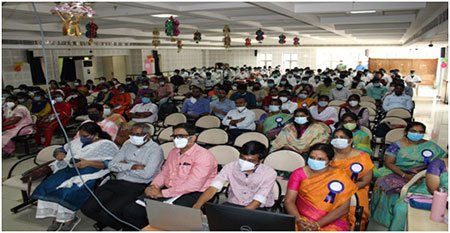
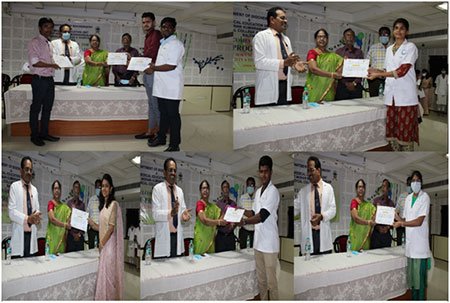
- This hands-on training was arranged for paramedical students like DMLT, BSc MLT. Around 300 students participated from in and around Salem. Training was given to set up a basic clinical laboratory.
- Calibration and quality control in semi-auto analyser was discussed and explained.
- Trouble shooting, dismantling, simple repair were taught for semi-auto analyser.
- Programming of analytes in semi-auto analyser was explained.
- Workshop on trouble shooting and repair, hands-on training in micropipette, colorimeter, centrifuge was given.
- Students presented posters.
Full invitation PDF: /assets/images/biochemistry/CLE-INVIT.pdf
Upcoming Event
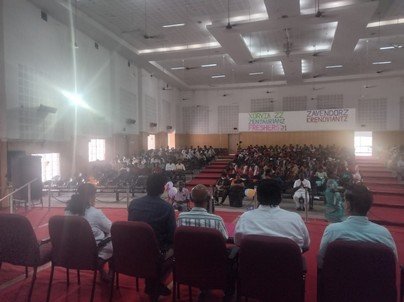
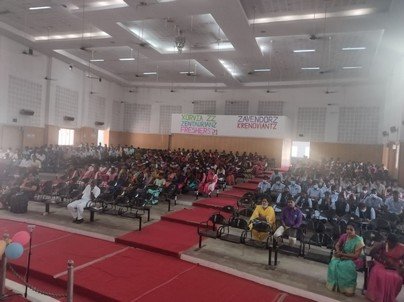
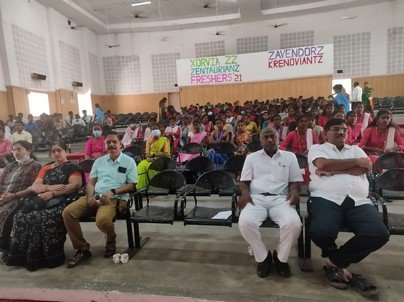
Quiz: Zonal Level Quiz for First Year MBBS Students
Date: 13.09.2023
Venue: College Auditorium
Academic Activities
Courses Included in the Teaching Curriculum
Medical
- MBBS 1st Year
- M.D. Biochemistry
Paramedical
- DMLT 1st & 2nd years
- BSc MLT 1, 2, and 3rd years
- BSc Nursing – Basic and Post Basic
- One month orientation lectures are given to the following paramedical courses to teach them the basics of Biochemistry
- Anesthesia Technician
- CMLT
- Dialysis Technician
- DRDT
- DRTT
- ECG Technician
- Theatre Technician
- Emergency Care Technician
- Nursing Assistant
- Ortho Technician
- Radiology Technician
Standard Schedule
1. M.B.B.S. Standard Teaching Schedule
| Week | Schedule |
|---|---|
| I | Group Discussion |
| II | Seminar |
| III | Case Discussion |
| IV | Mentorship / Discussion on SDL |
- Integrated session once in 2 months
- Early clinical exposure once in 3 months
- Quiz once in a year
- Theory internal assessments every 6 weeks
- Practical internal assessment once in 2 months
2. BSc. MLT Standard Teaching Schedule
- Four theory classes and one practical class in a week
- Intensive lab training weekly once in hospital lab
- Theory internal assessments every 3 months
- Practical internal assessment once in 3 months
- Exclusive internship for 4 months after completion of the course
3. Nursing Standard Teaching Schedule
- Two theory classes in a week covering basic biochemistry topics
- Theory internal assessments every 3 months
4. BSc. Cardiac Technology / OT Technology Standard Teaching Schedule
- Two classes in a week covering basic biochemistry topics
- Internal assessments every 3 months
5. DMLT Standard Teaching Schedule
- Five theory classes and two practical classes in a week
- Intensive lab training on alternate months in Biochemistry, Pathology and Microbiology in rotation
- Theory internal assessments every 3 months
- Practical internal assessment once in 3 months
- Exclusive internship for 3 months after completion of the course
Noteworthy Performance in MBBS University Examinations
- 2008–2009 – 100% Pass
- 1999–2000 – University First: Dr. Subitha
- 2005–2006 – University First: Dr. Karthick
- 2013–2014 – No. of Distinctions: 15; Honours: 3
- 2016–2017 – No. of Distinctions: 19; Honours: 11
- 2017–2018 – No. of Distinctions: 17; Honours: 2
- 2019–2020 – No. of Distinctions: 14; Honours: 1
- 2020–2021 – No. of Distinctions: 13; Honours: 3
P.G. Course
Three postgraduate seats have been sanctioned for the academic year 2016–2017. Three postgraduates joined in M.D. (Bio) from the academic year 2016–2017, continued till date with 3 postgraduates per year.
Laboratory Services
The Clinical Biochemistry laboratory functions within the premises of the GMKMC Hospital, manned by qualified medical officers and efficient technical staff members.
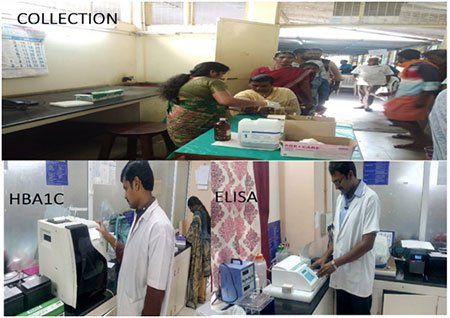
Blood samples are collected through the common collection center. The amply equipped central lab and the 24-hour emergency lab operate to analyze the in-patient, out-patient, NCD (Non-Communicable Diseases) OP, Master Health Checkup and emergency cases effectively, and have been instrumental in helping the clinicians treat the thousands of ailing patients the vast hospital caters to.
The Lab Investigations Are Performed In
- Fully automated Biochemistry analyzers
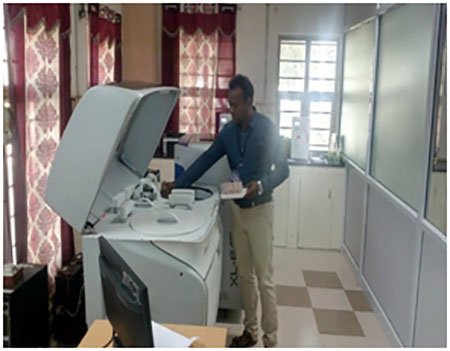
- Semi-automated Biochemistry analyzers — the fully automated analyzer XL-640 has been imperative for the functioning of the lab due to its accuracy, precision, speed and economical usage of the reagents
- Electrolyte Analyser
- ABG Analyser
- HbA1C Analyser
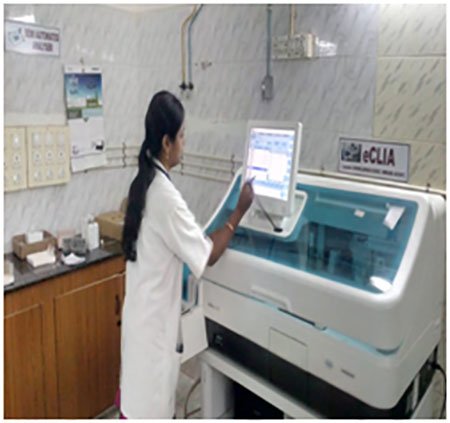
- CLIA – Hormones
- Electrophoresis
- HPL Chromatography – mainly for screening Hemoglobinopathies
Haemoglobinopathy screening programme was started in our lab since 2018 and does nearly 200 samples every month. We are receiving samples from all nearby hilly regions like Kolli Hills, Yercaud and Kariyalur (Kallakuruchi).
Quality Control
The Clinical Biochemistry lab of GMKMCH is under the ACBI/CMC External Quality Assurance (EQAS) program of Christian Medical College, Vellore, keeping a check on the quality of the tests done. The results are sent every month and reports are obtained ensuring satisfactory performance of the lab.
List of Investigations Done
Blood
- Sugar
- Urea
- Creatinine
- Lipid Profile – Total Cholesterol
- –do– – HDL Cholesterol
- –do– – Triglycerides
- Bilirubin – Total & Fractions
- Total Proteins
- Albumin, A:G Ratio
- Uric Acid
- Calcium
- Phosphorus
Electrolytes
- Sodium
- Potassium
- Bicarbonate
- Chloride
Enzymes
- SGOT (AST)
- SGPT (ALT)
- Lactate Dehydrogenase (LDH)
- Creatine Phosphokinase (CPK) & (CPK-MB)
- Amylase
- Acid Phosphatase (ACP)
- Alkaline Phosphatase (ALP)
- Gamma Glutamyl Transpeptidase (GGT)
- Cholinesterase
- Glucose Tolerance Test
Special Investigations
- ABG
- Thyroid Function Tests
- Vit. B12
- Vit D
- S. Ferritin
- HbA1C
- CRP
- Metabolic Screening Tests
- Electrophoresis
- HPL Chromatography – Hemoglobinopathy Screening
- S. Insulin
- CEA
- CA19/9
- AFP
Urine Analysis
- 24 Hours Urine Proteins
- Urine PCR
Fluid Analysis
- Cerebrospinal Fluid
- Ascitic Fluid
- Pleural Fluid
Stone Analysis
Biochemical analysis of Renal/Salivary/Gall stones.
In addition, during the COVID period, our laboratory did all the COVID inflammatory markers as 24-hour services and served the people well.
Statistics of Investigations Done
| Year | OP (Incl. MHC, NCD) | IP (Incl. Emergency) | Total |
|---|---|---|---|
| 2012 | 181316 | 351657 | 532973 |
| 2013 | 162611 | 390848 | 553459 |
| 2014 | 185855 | 429853 | 615708 |
| 2015 | 188927 | 471909 | 660836 |
| 2016 | 202170 | 531400 | 733570 |
| 2017 | 256923 | 725066 | 981989 |
| 2018 | 329275 | 672319 | 1001594 |
| 2019 | 399802 | 1003846 | 1403648 |
| 2020 | 194928 | 1014199 | 1209127 |
| 2021 | 232565 | 1206726 | 1489287 |
| 2022 | 489450 | 1196633 | 1686083 |
Monthly Statistics for the Year 2023
| Month | OP | IP | Total |
|---|---|---|---|
| Nov 2022 | 42944 | 113767 | 156711 |
| Dec 2022 | 39008 | 97490 | 136498 |
| Jan 2023 | 31109 | 95050 | 126159 |
| Feb 2023 | 39671 | 96909 | 136580 |
| Mar 2023 | 40901 | 113607 | 154508 |
| Apr 2023 | 39523 | 110858 | 137867 |
| May 2023 | 35731 | 115826 | 151557 |
| Jun 2023 | 39523 | 123777 | 163300 |
| Jul 2023 | 44795 | 144060 | 188855 |
Ongoing Projects
- A comparative study of serum pentraxin-3 levels and high sensitivity CRP levels in patients with diabetic nephropathy – Dr. Nithya
- Study of sestrin-2 as a predictive biomarker for atherosclerosis in type 2 diabetes in a tertiary care hospital – Dr. Mithun
- Study of serum Lp-PLA2 (Lipoprotein Associated Phospholipase A2) in metabolic syndrome patients – Dr. Nandhini
Research Activities
The department advocates staff-student interaction that nurtures research mindedness among the budding doctors.
Over the years, quality research projects have been undertaken by the students, many funded by the ICMR. The notable ones are listed below:
- Biochemical Profile in Nephrotic Syndrome
- Glycosylated Hemoglobin in Newly Detected Diabetic Patients in Various Age Groups – A Prospective Study
- Spot Urine Creatinine:Protein Ratio – Can It Replace 24-Hour Urine Protein Estimation
- Screening of Hemoglobin Variations – A Hospital-Based Prospective Study
- Serum & 24-Hour Urinary Calcium and Uric Acid in Renal Stone Formers
- Microalbuminuria in Non-Insulin Dependent Diabetes Mellitus
- Assessment of Calcium Balance in Nephrotic Children
- Serum Lactic Acid, Lactate Clearance and Uric Acid Levels in Acute Coronary Syndrome
- A Case Control Study of Predictors of Myocardial Infarction in the Post-COVID and Non-COVID Patients Among the Risk Population of Salem District – Dr. Kalaiselvi, M.D(Bio), Dr. Gayathri Sethurajan, CRRI
- STS 2020, Ref. ID: 202006946, Title: Comparison of Thyroid Function Between Individuals with Chronic Kidney Disease and Healthy Population – A Faculty-Based Cross-Sectional Study in Tertiary Care Hospital – Dr. Sangeetha, M.D(Bio), Dr. Raveena (Student)
Completed Project Works (Research Publications)
- Correlation of Serum Malondialdehyde Level with Components of Metabolic Syndrome
- A Study on Premarital Screening for Beta Thalassemia Trait in Hilly Areas Around Salem
- Effect of Different Anticoagulants on HbA1C Values by HPLC Method at GMKMCH
- Comparison of Biochemical Data Obtained from Master Health Checkup Patients and Known Diabetic Individuals
- Role of Urinary Neutrophil Gelatinase Associated Lipocalin as an Earlier Marker in Detecting Diabetic Nephropathy
- Serum Cystatin C: A Better Marker of Preeclampsia
- Study of Vitamin D Status in Normal Healthy Individuals and Its Association with Parathyroid Hormone Levels
- Role of Uric Acid in Detection of Early Renal Function Decline in Type 1 Diabetes
- Ischemia Modified Albumin: A Recent Biomarker in the Diagnosis of Acute Coronary Syndrome
- Serum Albumin and Uric Acid Estimation in Ischemic Heart Disease Patients
- Serum Copper-Zinc Ratio and Ceruloplasmin in South Indian Women with Thyroid Disorders
- Study of Uric Acid and Iron Levels in Parkinsonism
- Comparison Between Serum Total, Ionized and Calculated Calcium at Different Albumin Concentrations
- Study of Insulin Levels in Subclinical Hypothyroidism
- Liver Enzymes and Thyroid Hormones Profile in Chronic Kidney Disease
- Evaluation of Plasma D-Dimer in Type 2 Diabetes Patients
- Serum Calcium and Magnesium in Hypothyroid Patients
- Serum Calcium and Phosphorus Levels in Chronic Liver Disease
- Role of Uromodulin as a Predictor of Decline in Renal Function
- Study of Serum Osteopontin Levels in Chronic Liver Disease
- Assessment of Plasma Lipopolysaccharide Binding Protein Levels in Non-Diabetic Obese Subjects
- Serum Uric Acid, CK and LDH in Thyroid Disorders
- Microalbuminuria and Albumin Creatinine Ratio in Type 2 DM
- Serum Osteoprotegerin – Can It Predict Chronic Kidney Disease Among Hypertensives?
- Assessment of Thyroid Autoantibodies in Type 1 DM
- Assessment of Maternal Serum Docosahexaenoic Acid in Pre-Eclampsia and Uncomplicated Pregnancies
- Serum Galectin-3 – Can It Be an Early Predictor of Reduced Ejection Fraction Among Chronic Heart Failure Patients
- Serum Endoglin – Is It an Early Predictor of Diabetic Nephropathy
- Serum Endocan Levels in Non-Alcoholic Fatty Liver Disease – Is It Influenced by Glycemic Status of the Patients
- Study of Circulating Alpha Klotho Protein Levels in CKD Patients from a Tertiary Care Hospital
- Evaluation of Presepsin as a Biomarker in Neonatal Sepsis
Departmental Routine Teaching Activities
- Periodical seminars are conducted in our department for 1st year MBBS students.
- Medal examination was conducted in our department for 1st year MBBS students in July 2016.
- Seminars, journal club, case discussion and lecture classes are held periodically for postgraduate students in our department.
- Postgraduates won 3rd prize in the quiz competition held at Young AMBICON 2016 conference held at Hyderabad.
- Poster presentation was done by two of our postgraduates at Young AMBICON 2016 held at Hyderabad, and also every year paper and poster presentations were done by our PG students at AMBICON and other National conferences.
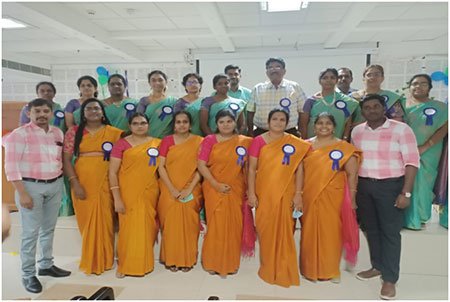
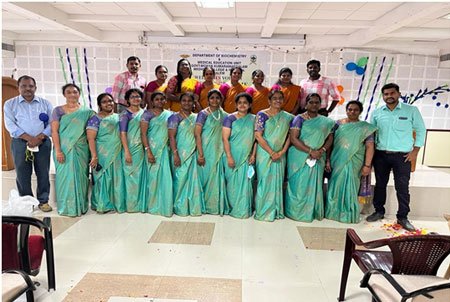
Biochemistry Department – Faculty Members
Pictures of Department Laboratory
Pictures of CME, Quiz, Departmental Activities